
In simple term the domain theory of magnetism asks us to imagine a potentially magnetic material (such as iron) as being composed to a vast number of mini-bar magnets. These mini-bar magnets continuously attract and repel each other, but as they are randomly aligned the forces cancel each other out and the material as a whole exerts no magnetic pull.
The creation of a magnetic involves persuading these mini-bar magnets to turn to a common alignment where their small individual pull and pushes join together to create a force sufficient to move objects in their external world.
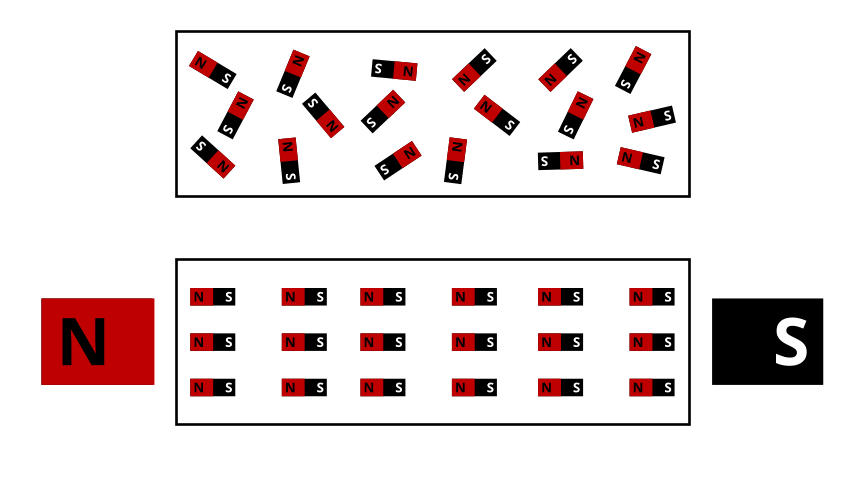
The analogy is that human collectives behave in a similar way. Without achieving significant alignment of their individual members they cannot excerpt change upon their external world.
Alignment may be achieved through such means as leadership, shared culture and believe systems or management, policy, training and audit. The first group could be considered as being “ethically” based and the second “scientific”.
Many collectives are also subject to multiple external political policy and targets which seeks to align their collective forces to external goals. These often act against other alignments and therefore effective collective action.
For a company (or indeed an economy) a symptom of low alignment would be poor productivity.
Where the analogy falls down is that with collectives we are dealing with people who are subject to multiple pulls external to their organisation. Also – should these people be capable of “free will” they may choose to reject collective alignment in favour of personal goals.
My contention is that effective collective actions requires ethical / faith underpinning in the same way as individual actions.